







Cashback Offers: Getting Value from Losses
 11/set/2025 . 7:21
Cashback offers can be a tempting feature for players at online casinos like QBet Casino games. They promise to give you a percentage of your losses back, making the gambling experience feel a bit less punishing. However, it’s essential to understand how these offers work and whether they genuinely add value, or if they are just marketing gimmicks.
What Exactly Are Cashback Offers?
Cashback offers are promotions that return a certain percentage of your net losses over a specified period. For instance, a casino might offer a 10% cashback on losses incurred during a week up to a maximum of £100. This means if you lost £500, you could receive £50 back into your account.
How Do Cashback Offers Work?
Cashback offers usually operate on a simple premise: the more you lose, the more you get back. Here’s a step-by-step breakdown:
- Players must opt into the cashback program, which can vary between casinos.
- During the promotional period, players track their net losses.
- At the end of the period, the casino calculates the cashback amount based on the predefined percentage.
- Cashback is often credited as bonus funds, which may come with wagering requirements, typically around 35x.
Are Cashback Offers Worth It?
It depends on several factors, including the percentage of cashback, the wagering requirements, and your playing habits. If the cashback percentage is low or the wagering requirements are high, you might find that you’re not really gaining any value from the offer. For example, a 10% cashback with a 35x wagering requirement means you’d need to wager £1,750 to clear just £50 in bonus funds.
Potential Pitfalls of Cashback Offers
- High Wagering Requirements: Always read the terms and conditions. High wagering requirements can significantly reduce the actual value of cashback.
- Limited Games: Some cashback offers only apply to specific games or types of play, limiting your options.
- Time Constraints: Cashback offers typically have a time limit, which may pressure you to play more than you intended to meet the requirements.
Common Myths about Cashback Offers
- Myth 1: Cashback is free money.
Reality: Cashback often comes with wagering requirements that need to be met before withdrawal. - Myth 2: All losses qualify for cashback.
Reality: Many casinos only consider losses from specific games or types of bets. - Myth 3: Higher cashback percentages are always better.
Reality: Always consider the terms attached to the cashback, as a higher percentage with stringent requirements may not be beneficial.
Comparative Analysis of Cashback Offers
| Casino | Cashback Percentage | Wagering Requirement | Max Cashback |
|---|---|---|---|
| QBet Casino | 10% | 35x | £100 |
| Casino A | 15% | 40x | £150 |
| Casino B | 5% | 25x | £50 |
In summary, while cashback offers can provide some relief from losses, they should be approached with caution. Transparency in terms and conditions is critical, as is understanding the actual value you might gain. Always do your research and ensure that you know what you’re signing up for before diving into any gambling promotions.
 Publicado em
Soane Galvão teve participação importante no reajuste dos servidores públicos ao lado do governador Jerônimo Rodrigues
10/set/2025 . 20:56

A deputada estadual Soane Galvão esteve presente em um momento histórico para a Bahia, ao lado do governador Jerônimo Rodrigues, na sanção do pacote de leis que garante valorização e reconhecimento aos servidores públicos estaduais. A medida beneficia quase 45 mil profissionais, com a reestruturação de carreiras e reajustes salariais que chegam a até 22,1%, contemplando áreas como fiscalização, gestão pública, obras, especialistas da Secretaria de Infraestrutura, magistério das universidades e fazendários.
A deputada Soane Galvão destacou a relevância da conquista: “Ter participação nesse processo, junto ao nosso governador, é reafirmar meu compromisso com aqueles que dedicam suas vidas ao serviço público. Valorizar os servidores é fortalecer a Bahia e investir no futuro do nosso povo”, afirmou.
Além da valorização dos servidores, o encontro na Assembleia Legislativa da Bahia (ALBA) trouxe à pauta grandes projetos de mobilidade, como a Ponte Salvador-Itaparica, a expansão do metrô, a implantação do VLT e a nova rodoviária. Também foi autorizada a criação da Secretaria Estadual para Assuntos do Sistema Rodoviário e da Ponte Salvador-Itaparica (Seponte) e sancionada a lei para o Núcleo de Atendimento ao Cidadão e Transparência, iniciativas que prometem transformar a vida de milhões de baianos.

L’industrie du jeu en ligne a connu une croissance exponentielle ces dernières années, portée par un
10/set/2025 . 6:00
Introduction : Le virage de la responsabilisation dans le jeu en ligne
L’industrie du jeu en ligne a connu une croissance exponentielle ces dernières années, portée par une innovation technologique incessante et une demande croissante des consommateurs. Cependant, cette expansion soulève également des enjeux cruciaux autour de la protection du joueur, de la prévention de la dépendance, et de la garantie d’une expérience équitable et transparente. Les éditeurs de jeux, comme Hacksaw Gaming’s Le Cowboy, innovent en intégrant des fonctionnalités responsables et des stratégies de transparence afin de bâtir une confiance durable avec leur public.
La montée en puissance de l’innovation responsable : un impératif stratégique
L’intégration de mécanismes responsables dans les jeux va bien au-delà de la conformité réglementaire. Les éditeurs pionniers adoptent des pratiques centrées sur l’utilisateur, en s’appuyant sur des données et des analyses pour ajuster continuellement leur offre. Par exemple, certains fournisseurs proposent désormais des outils de contrôle de mise, des messages de sensibilisation, ou encore des options d’étourdissement pour prévenir le jeu excessif. Dans cette optique, la plateforme Hacksaw Gaming’s Le Cowboy s’est distinguée par ses concepts innovants, en proposant un gameplay immersif tout en veillant à une expérience de jeu responsable.
| Critère | Pratique Innovante |
|---|---|
| Auto-exclusion | Systèmes de pause automatique et limites de session intégrées pour encourager un jeu responsable |
| Transparence | Affichage clair des statistiques de jeu et des probabilités de gain |
| Engagement | Gamification tout en promouvant une consommation modérée |
Les défis réglementaires et techniques de l’industrie
La régulation stricte à l’échelle mondiale oblige les opérateurs à innover constamment pour respecter des standards souvent adaptés à des marchés très différents. L’implémentation de systèmes de vérification d’âge, de détection de comportements à risque, ou encore de modules de reportings précis est devenue une norme incontournable. Paradoxalement, ces contraintes favorisent aussi la créativité des fournisseurs, qui développent des solutions sur mesure comme celles présentées dans Hacksaw Gaming’s Le Cowboy, leur permettant d’intégrer sécurité et divertissement tout en renforçant leur crédibilité.
L’avenir : innovations technologiques et responsabilité intégrée
Les technologies émergentes telles que l’intelligence artificielle, le machine learning, ou encore la blockchain offrent de nouvelles opportunités pour optimiser l’expérience de jeu tout en garantissant un cadre responsable. Par exemple, l’analyse prédictive permet d’anticiper les comportements à risque, d’intervenir en temps réel, et de personnaliser les limites en fonction du profil du joueur. Dans cette course à l’innovation, des acteurs comme Hacksaw Gaming’s Le Cowboy incarnent une approche pionnière en combinant divertissement haut de gamme et engagement pour la responsabilité.
Novo diretório do PT de Ilhéus toma posse no próximo sábado (13) com homenagens a Everaldo Anunciação
9/set/2025 . 22:22

Evento reúne lideranças locais, estaduais e nacionais para marcar o início de um novo ciclo político no município
O Partido dos Trabalhadores (PT) de Ilhéus dará início a uma nova etapa de sua trajetória política no próximo sábado (13), com a posse da presidenta eleita Camile Maltez e dos 28 integrantes do diretório municipal, para o quadriênio 2025-2029. O Encontro Municipal acontece a partir das 9h, na sede da APPI/APLB, no bairro do Malhado, e terá como ponto alto a homenagem ao ilheense Everaldo Anunciação, que deixou sua marca na história do PT na Bahia e no cenário nacional.
O evento contará com a presença de lideranças locais, estaduais e nacionais. Já confirmaram participação o deputado federal Josias Gomes; a deputada estadual Fátima Nunes; a assessora especial do Governador Jerônimo Rodrigues e membro do diretório municipal, Adélia Pinheiro; o presidente estadual do partido, Tássio Brito; além dos dirigentes nacionais Deyvid Bacelar e Eden Valadares (secretário nacional de Comunicação).
O diretório que assumirá novo mandato foi eleito em julho, por meio do Processo de Eleições Diretas (PED), em que todos os filiados tiveram direito a voto. Para Camile Maltez, a gestão será pautada na transparência e na unidade da militância.
“Temos um legado, uma linda história de dedicação e luta por princípios como igualdade e justiça social, bem-estar coletivo, dignidade e valorização das trabalhadoras e trabalhadores”. Destaca Maltez. Nosso grande propósito, além de reeleger Lula e Jerônimo em 2026, é dar continuidade a este legado, fortalecê-lo e honrar companheiros como Ariadne Pitanga, Ednei Mendonça, Everaldo Anunciação, e a professora Carmelita Ângela”, pontua.
Homenagens a Everaldo – O Encontro Municipal terá como tema central a homenagem à memória de Everaldo Anunciação, falecido inesperadamente aos 65 anos, em agosto. Natural de Ilhéus, Everaldo sempre expressou profundo amor pela cidade, onde iniciou sua militância política.
Sua dedicação em nível local abriu caminho para uma trajetória de grande relevância: na Bahia, foi presidente estadual do PT, e no cenário nacional ocupava a vice-presidência do partido, consolidando-se como uma das principais lideranças petistas.
Com forte atuação no sul da Bahia, Everaldo foi vereador em Itabuna (1997–2000), além de secretário municipal em diferentes gestões. Servidor da Ceplac (Comissão Executiva do Plano da Lavoura Cacaueira), exerceu em 1998 o cargo de diretor-geral adjunto. Também presidiu a regional sul da Central Única dos Trabalhadores (CUT), sempre em defesa dos direitos da classe trabalhadora.
NA FOTO: CAMILE MALTEZ, EDNEI MENDONÇA E ADÉLIA PINHEIRO (Arquivo PT Ilhéus)

Câmara de Ilhéus aprova projeto que autoriza novas formas de pagamento do auxílio-alimentação a servidores municipais
9/set/2025 . 22:19

A Câmara Municipal de Ilhéus (CMI) aprovou, durante a sessão desta terça-feira (09/09), o Projeto de Lei Ordinária (PLO) nº 124/2025, de autoria do Poder Executivo, que autoriza a definição de novos meios de pagamento do auxílio-alimentação aos servidores municipais. A proposta é uma resposta ao fim do contrato da Prefeitura municipal com a empresa BK Bank, responsável pelo benefício e que está sendo investigada por associação a organizações criminosas.
Aprovado por unanimidade, o projeto altera a Lei municipal 4.228/2023, que define que o pagamento do auxílio-alimentação deverá ser feito por meio de um cartão específico. A partir de agora, e em caráter excepcional, o Executivo poderá transferir os valores aos servidores via depósito em conta, crédito suplementar em folha ou “outro mecanismo seguro”, como define o texto.
Antes de ir a plenário, a pauta foi discutida pela Comissão de Finanças, Orçamento, Obras e Serviços Públicos, que apresentou parecer favorável à aprovação. O vereador Gurita (PSD), que integra o colegiado, fez a defesa da matéria aos colegas, justificando que a medida visa impedir que o fim do contrato com o BK Bank traga ainda mais prejuízos aos servidores municipais.
“Os servidores têm, nesse auxílio-alimentação, um complemento para o sustento dos seus familiares. Então, essa Casa faz um gesto de grandeza, em favor do servidor, apoiando a iniciativa do Executivo”, afirmou o vereador Gurita.
A autorização da mudança do meio de pagamento do benefício terá validade até que seja realizada a regularização contratual ou celebração de novo contrato.
Prefeitura de Ilhéus entrega Praça da Mangueira revitalizada no bairro Nelson Costa
9/set/2025 . 0:18
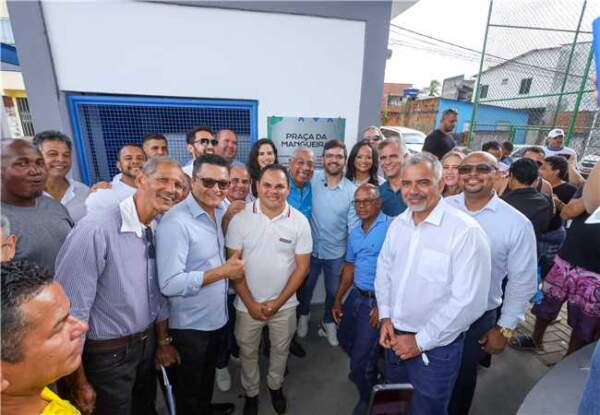
A manhã deste último domingo (7) foi marcada por um momento de celebração para os moradores do bairro Nelson Costa, em Ilhéus. A Prefeitura entregou a revitalização da tradicional Praça da Mangueira, um espaço que agora ganha nova vida e passa a oferecer mais lazer, segurança e qualidade de convivência para a comunidade.
O local recebeu iluminação em LED, um parquinho infantil moderno, academia ao ar livre e a quadra poliesportiva completamente reformada. Com essas melhorias, a praça volta a ser ponto de encontro das famílias, fortalecendo o convívio social e ampliando as opções de esporte e recreação no bairro.
A inauguração contou com grande participação popular e presença de autoridades municipais, vereadores e lideranças comunitárias, demonstrando a importância do espaço para a população. Além da entrega oficial, a cerimônia também foi marcada por anúncios de novas ações da gestão, reforçando o compromisso de levar infraestrutura a diferentes áreas da cidade.
Entre as iniciativas apresentadas estão a construção de um camelódromo no Centro da cidade, a instalação de novos pontos de ônibus em vários bairros, a retomada da obra da creche no Nossa Senhora da Vitória, além de readequações viárias em regiões como Iguape, Nelson Costa, Hernani Sá e Cidade Nova. Outro destaque foi a confirmação de um projeto de iluminação da ciclovia da Orla Sul, atendendo a uma demanda antiga da comunidade que utiliza diariamente o espaço para lazer e mobilidade.
Com a entrega da Praça da Mangueira revitalizada e os novos investimentos anunciados, a Prefeitura busca ampliar os espaços de convivência e oferecer melhores condições de infraestrutura urbana, impactando diretamente na qualidade de vida da população
Loyalitätsbelohnungen im allyspin casino: So funktioniert das System
8/set/2025 . 23:40
Willkommen im allyspin casino! Hier erfahren Sie alles über die Loyalitätsbelohnungen, die Sie für Ihr Spielverhalten erhalten können. Dieses System ist darauf ausgelegt, Ihnen als Spieler für Ihre Treue und Aktivität zu danken. Lassen Sie uns gemeinsam die Details durchgehen!
Was sind Loyalitätsbelohnungen?
Loyalitätsbelohnungen sind spezielle Angebote, die Sie erhalten, wenn Sie regelmäßig im allyspin casino spielen. Diese Belohnungen können in Form von Bonusguthaben, Freispielen oder exklusiven Angeboten erfolgen. Je aktiver Sie spielen, desto mehr Belohnungen können Sie sammeln.
Wie funktioniert das Loyalitätssystem im allyspin casino?
Das Loyalitätssystem basiert auf einem Punktesystem, bei dem Sie für jede Wette, die Sie platzieren, Punkte sammeln. Diese Punkte können dann gegen verschiedene Belohnungen eingelöst werden. Der Prozess sieht folgendermaßen aus:
- Für jede Wette erhalten Sie eine bestimmte Anzahl von Punkten.
- Je mehr Punkte Sie sammeln, desto höher steigen Sie in der Loyalitätsstufe auf.
- Jede Stufe bietet unterschiedliche Belohnungen und Vorteile.
Welche Loyalitätsstufen gibt es?
Im allyspin casino gibt es mehrere Loyalitätsstufen, die Sie erreichen können. Jede Stufe bietet Ihnen zusätzliche Vorteile:
| Loyalitätsstufe | Punkte erforderlich | Belohnungen |
|---|---|---|
| Bronze | 0 – 499 | 10% Bonus auf Einzahlungen |
| Silber | 500 – 999 | 15% Bonus + 5 Freispiele |
| Gold | 1000 – 1999 | 20% Bonus + 10 Freispiele |
| Platin | 2000+ | 25% Bonus + 20 Freispiele + VIP-Service |
Wie können Sie Ihre Loyalitätsbelohnungen einlösen?
Um Ihre Loyalitätsbelohnungen einzulösen, müssen Sie sich in Ihr Konto einloggen und den Bereich für Loyalitätsbelohnungen aufsuchen. Dort sehen Sie Ihre gesammelten Punkte und die verfügbaren Belohnungen. Wählen Sie einfach die Belohnung aus, die Sie einlösen möchten, und folgen Sie den Anweisungen auf dem Bildschirm.
Häufig gestellte Fragen zu Loyalitätsbelohnungen
Wie viele Punkte benötige ich für eine Belohnung?
Die Anzahl der benötigten Punkte variiert je nach Belohnung. Kleinere Belohnungen erfordern weniger Punkte, während größere Belohnungen mehr Punkte benötigen.
Gibt es ein Verfallsdatum für die gesammelten Punkte?
Ja, die Punkte haben ein Verfallsdatum. In der Regel verfallen sie nach 12 Monaten Inaktivität. Es ist also wichtig, regelmäßig zu spielen, um Ihre Punkte zu behalten.
Kann ich meine Punkte übertragen?
Leider können Sie Ihre gesammelten Punkte nicht auf andere Konten übertragen oder verkaufen. Sie sind nur für Ihr persönliches Konto gültig.
Allgemeine Mythen über Loyalitätsbelohnungen
- Mythos: Man muss viel Geld ausgeben, um Loyalitätsbelohnungen zu erhalten.
- Fakt: Sie erhalten Punkte für jede Wette, unabhängig von der Höhe des Einsatzes.
- Mythos: Loyalitätsbelohnungen sind nur für High Roller verfügbar.
- Fakt: Alle Spieler, die regelmäßig spielen, können von den Belohnungen profitieren.
- Mythos: Man muss komplizierte Anforderungen erfüllen, um Belohnungen zu erhalten.
- Fakt: Das Einlösen von Belohnungen ist einfach und unkompliziert.
Wenn Sie weitere Fragen haben oder Unterstützung benötigen, steht Ihnen unser Kundenservice jederzeit zur Verfügung. Ihr Spielerlebnis ist uns wichtig, und wir möchten sicherstellen, dass Sie die bestmögliche Zeit im allyspin casino verbringen. Viel Spaß beim Spielen und Sammeln Ihrer Loyalitätsbelohnungen!
Unlocking the Mysteries of Ancient Jackpots: A Deep Dive into Eye of Horus Slot Analysis
8/set/2025 . 17:55
Introduction: The Allure of Ancient-Themed Slot Machines in the Digital Age
The resurgence of ancient Egypt-inspired motifs in the online casino industry exemplifies a broader trend towards immersive, narrative-driven gaming experiences. Among these, the Eye of Horus slot has emerged as a quintessential title that combines historical symbolism with modern gaming mechanics. Its appeal lies not only in entertainment but also in the tantalising possibility of substantial jackpots—an aspect that warrants a thorough exploration of its jackpot potential.
Understanding the Roots: Why Ancient Egypt Continues to Capture Imagination
Ancient Egypt’s mystique and rich symbolism have long captivated cultural imagination, extending well into digital gaming. The Eye of Horus, an ancient Egyptian symbol representing protection, health, and royal power, lends itself powerfully to the theme’s mysticism. When integrated into slot design, it creates an ambiance promising both entertainment and the allure of fortune.
Mechanics and Design of the Eye of Horus Slot
The Eye of Horus jackpot potential is rooted in sophisticated game design incorporating modern random number generators (RNGs), payline structures, and bonus features. Typically, these slots feature five reels, multiple paylines, and bonus rounds triggered by specific symbol combinations, all designed to optimise payout opportunities.
Statistical Perspective: Probabilities and Payout Structures
To comprehend the jackpot potential, it’s essential to examine the underlying probability matrices. For example, a common setup offers:
| Feature | Typical Odds | Impact on Jackpot |
|---|---|---|
| Symbol matching on multiple paylines | 1 in 200 to 1 in 1,000 | Potential for significant wins, especially in bonus rounds |
| Triggering free spin/bonus rounds | 1 in 50 to 1 in 150 | Enhanced jackpot odds during bonus features |
| Progressive jackpot activation | Variable, often rare | Largest prizes in the game; depends on player stakes and jackpot pool |
These odds inform players and operators alike of the inherent variability and potential for sizeable payouts. Notably, progressive jackpots can surpass hundreds of thousands of pounds, especially when the game features a networked pool across multiple platforms.
Industry Insights: The Significance of Jackpot Dynamics in Player Engagement
“The thrill of hitting a large jackpot fuels continued player engagement and motivates longer play sessions. The integration of immersive themes like Eye of Horus amplifies this effect, blending cultural symbolism with the pursuit of wealth.” — Dr. Liam Carter, Gaming Industry Analyst
Operators often embed progressive jackpots within popular titles to boost retention and attract high-rollers. The allure of the Eye of Horus jackpot potential leverages both societal fascination with ancient Egypt and the psychological drivers of reward-seeking behaviour.
Expert Perspectives: Strategies to Maximise Success
While slot outcomes are primarily dictated by RNGs, understanding payout frequencies and bonus triggers can inform strategic play. For example, players should consider:
- Focusing on bonus rounds where jackpot chances are heightened
- Monitoring jackpot pools for growth trends
- Managing bankroll to sustain longer play durations
Ultimately, responsible gaming combined with an understanding of game mechanics enhances the experience, whether players aim for the big wins or enjoy the thematic immersion.
Conclusion: The Cultural and Economic Significance of Jackpot Potential
The Eye of Horus slot exemplifies how ancient symbolism can be harnessed in modern gaming to create compelling narratives and lucrative prizes. Its jackpot potential embodies a fusion of historical mystique and cutting-edge technology—a testament to the industry’s innovative trajectory. For enthusiasts and industry insiders alike, understanding these dynamics is vital to appreciating both the thrill and the strategic considerations involved.
To explore and test the game mechanics and jackpot possibilities firsthand, interested parties may visit this platform and experience the game in a risk-free environment.
Innovation et Évolution dans l’Industrie des Machines de Gestion de Ressources : Le Cas de Tower Rush
8/set/2025 . 8:11
Le secteur des machines automatisées de gestion de ressources est en pleine transformation, fruit d’une convergence entre avancées technologiques, exigences environnementales et nouvelles dynamiques économiques. Parmi les innovations émergentes, le Tower Rush se distingue comme une plateforme innovante, combinant automatisation, efficacité et accessibilité. Dans cet article, nous analysons comment cette technologie façonne l’avenir de l’industrie, en s’appuyant sur des sources fiables et en intégrant naturellement une ressource essentielle : l’essai gratuit du Tower Rush.
Le marché des machines de gestion intelligente : un panorama stratégique
Selon une étude de 2023 de l’Industrie 4.0, le marché mondial des solutions d’automatisation pour la gestion des ressources est évalué à plus de 150 milliards d’euros, avec un taux de croissance annuel moyen de 12 % (Source : Statista). Cette croissance est portée par une demande accrue dans divers secteurs : manufacturing, logistique, agriculture durable et villes intelligentes. La clé de cette évolution réside dans la capacité des systèmes à optimiser les processus, réduire les coûts et limiter l’empreinte environnementale.
Le Tower Rush apparaît comme une solution technologique particulièrement adaptée aux enjeux du moment :
- Intégration de l’intelligence artificielle pour la gestion prédictive
- Interface utilisateur intuitive permettant une prise en main rapide
- Modules modulables selon les besoins spécifiques de chaque secteur
Focus sur le Tower Rush : qu’est-ce qui le différencie ?
À la croisée des chemins entre robustesse technique et flexibilité opérationnelle, l’essai gratuit du Tower Rush constitue une étape cruciale pour les entreprises souhaitant évaluer concrètement ses capacités. La plateforme ne se limite pas à une simple automatisation ; elle s’inscrit dans une démarche stratégique d’optimisation continue, alignée avec les principes de l’industrie 4.0.
“L’innovation ne réside pas seulement dans la technologie, mais dans sa capacité à transformer des pratiques anciennes en modèles nouveaux, plus durables et plus efficaces.” — Expert en industrie numérique
Des cas d’application concrets : exemples de réussite
| Sector | Implémentation du Tower Rush | Résultat |
|---|---|---|
| Logistique | Gestion automatisée des inventaires et du stockage | Diminution de 30% des coûts logistiques, meilleure rotation des stocks |
| Manufacture | Optimisation des processus de production | Augmentation de la productivité de 20%, réduction des déchets |
| Agriculture | Systèmes d’irrigation automatisés intégrés à Tower Rush | Réduction de 25% de l’utilisation d’eau, amélioration des rendements |
Perspective d’avenir : vers une automatisation toujours plus intelligente
Les tendances actuelles indiquent une accélération du déploiement de technologies d’intelligence artificielle, de machine learning et d’Internet des Objets (IoT) dans le domaine des machines industrielles. Le Tower Rush, en tant que plateforme flexible, s’adapte à ces évolutions, offrant une vision d’avenir où la gestion des ressources sera de plus en plus autonome et intégrée.
Investir dans une solution innovante comme l’essai gratuit du Tower Rush devient ainsi un enjeu stratégique pour les entreprises qui souhaitent maintenir leur compétitivité dans un paysage en constante mutation.
Conclusion : l’innovation au service de la performance durable
La transformation numérique, illustrée par des solutions comme Tower Rush, représente une réponse concrète aux défis économiques et environnementaux. Évaluer et expérimenter ces outils via des initiatives telles que l’essai gratuit du Tower Rush est essentiel pour saisir leurs potentialités et intégrer durablement la smart automation dans les processus industriels.
Dans un monde où la performance, la durabilité et la technologie convergent, faire le choix d’une innovation fiable et vérifiée constitue une étape stratégique pour toute entreprise préparée à relever les défis de demain.
Czy mitologia pomaga zrozumieć nowoczesne gry i rozrywkę?
7/set/2025 . 1:32
Wprowadzenie: Czy mitologia wciąż odgrywa rolę w rozumieniu współczesnej rozrywki?
Mitologia od wieków stanowiła fundament kultury i religii, przekazując wartości, opowieści o bogach, bohaterach i kosmicznych siłach. W dzisiejszych czasach, mimo rozwoju nauki i technologii, mitologiczne motywy nadal silnie przenikają do świata rozrywki cyfrowej. Gry komputerowe, filmy i seriale często czerpią z dawnych opowieści, aby budować świat, tworzyć postaci i przekazywać głębokie przesłania. Czy jednak ta współczesna adaptacja pomaga lepiej zrozumieć mitologię, czy raczej służy jedynie jako efektowna ozdoba?
Spis treści
- Mitologia jako źródło inspiracji dla twórców gier i filmów
- Symbolika mitologiczna w grach: od starożytności do współczesności
- Mitologia a kultura Polski: odniesienia i inspiracje
- Rola mitologii w kształtowaniu światopoglądu i wartości w grach
- Mitologia i religia: granice i możliwości interpretacji w rozrywce cyfrowej
- Dlaczego mitologia jest ważna dla młodych polskich graczy i twórców
- Podsumowanie
Mitologia jako źródło inspiracji dla twórców gier i filmów
Współczesne gry i filmy często sięgają po mitologiczne motywy, by wzbogacić swoje fabuły i stworzyć uniwersalne, a zarazem oryginalne światy. Przykłady z różnych kultur pokazują, jak bogate źródło stanowią opowieści o bogach, herosach i mitach stworzenia. Na przykład, gry oparte na mitologii greckiej, takie jak „God of War”, czy produkcje inspirowane mitologią nordycką, jak „Assassin’s Creed Valhalla”, czerpią z głębi starożytnych narracji, adaptując je do nowoczesnych form rozrywki. W Polsce coraz częściej pojawiają się inspiracje z rodzimych legend i wierzeń, które dodają rozgrywce lokalnego kolorytu i głębi.
Przykłady gier opartych na mitologii
- „Hades” – gra opowiadająca o bogu podziemia, Hadesie, z silnym akcentem na mitologiczne motywy greckie.
- „Smite” – MOBA, w której gracze kontrolują postacie mitologicznych bogów z różnych kultur.
- „Gates of Olympus 1000” – nowoczesny slot online, który wykorzystuje motywy mitologii greckiej, co można zobaczyć na stronie maksymalna wygrana w Olympus 1000.
Wpływ mitologicznych motywów na fabułę i postaci
Mitologia nadaje postaciom głębię i uniwersalność, często ukazując ich jako bohaterów zmagających się z moralnymi dylematami, podobnie jak w starożytnych opowieściach. Fabuły gier z mitologicznymi motywami często skupiają się na walce dobra ze złem, odkupieniu czy próbach bohaterów, co znajduje odzwierciedlenie w wielu nowoczesnych tytułach. Takie podejście pozwala graczom lepiej zrozumieć archetypy i moralność, które wywodzą się z dawnych wierzeń.
Symbolika mitologiczna w grach: od starożytności do współczesności
Rola symboli takich jak ogień w grach i ich znaczenie duchowe
Symbole mitologiczne, takie jak ogień, woda czy światło, odgrywają kluczową rolę w budowaniu atmosfery i przekazywaniu głębokich treści. Ogień, na przykład, symbolizuje oczyszczenie, odrodzenie czy walkę. W grach, gdzie używa się pochodni czy ognistych atrybutów, często odwołuje się do tych duchowych znaczeń, podkreślając momenty przemiany lub zwycięstwa nad złem. W kontekście mitologicznym, ogień był darem bogów, symbolem wiedzy i siły, co świetnie wpisuje się w narrację rozgrywki.
Przykład: „Gates of Olympus 1000” jako nowoczesna interpretacja mitologicznych motywów
W „Gates of Olympus 1000” motyw mitologiczny przejawia się w symbolice bogów i ich atrybutów, a także w estetyce gry, która odwołuje się do starożytnych świątyń i mitów o olimpijskich bogach. Choć jest to nowoczesny slot, odwołanie do mitologii greckiej pozwala na głębsze zrozumienie symboliki i emocji związanych z dążeniem do maksymalnej wygranej, co można zobaczyć na stronie maksymalna wygrana w Olympus 1000.
Mitologia a kultura Polski: odniesienia i inspiracje
Czy polskie legendy i mitologie są wykorzystywane w rozrywce cyfrowej?
Chociaż globalne inspiracje mitologiczne dominują w branży gier, polskie legendy i wierzenia zaczynają odgrywać coraz większą rolę w lokalnych produkcjach. Przykładem mogą być gry, które czerpią z opowieści o Lechu, Czechu i Rusie, czy mitów związanych z wierzeniami słowiańskimi. Twórcy próbują w ten sposób podkreślić unikalność polskiej kultury i odróżnić się na tle międzynarodowej konkurencji.
Jak polskie symbole mogą być interpretowane w kontekście mitologicznym
Polskie symbole, takie jak orzeł biór, święte góry czy wydarzenia z legend, mają swoje korzenie w dawnych wierzeniach i mitach. Na przykład, orzeł symbolizuje niepodległość i siłę, a jego historia sięga legend o początkach państwa polskiego. Interpretacja tych symboli w kontekście mitologicznym pozwala na lepsze zrozumienie tożsamości narodowej i wartości przekazywanych młodemu pokoleniu.
Rola mitologii w kształtowaniu światopoglądu i wartości w grach
Przekazy moralne i filozoficzne inspirowane mitologią
Mitologia od zawsze zawierała przesłania moralne i filozoficzne, które są nadal aktualne. Gry oparte na mitologii często uczą graczy o odwadze, lojalności, sprawiedliwości czy odkupieniu. Na przykład, w grach inspirowanych mitologią grecką, bohaterowie muszą zmierzyć się z własnymi słabościami, co odzwierciedla starożytne opowieści o bohaterach i ich dylematach moralnych.
Jak mitologia grecka pomaga zrozumieć postawy bohaterów w grach
Postaci takie jak Herakles, Perseusz czy Achilles odzwierciedlają archetypy, które pomagają graczom zrozumieć motywacje i wybory bohaterów. W grach, które sięgały po te postaci, można dostrzec, jak mitologia wyjaśnia ich charakter, słabości i siłę moralną. To z kolei wpływa na głębię narracji i zaangażowanie odbiorcy.
Mitologia i religia: granice i możliwości interpretacji w rozrywce cyfrowej
Jak unikać kontrowersji i korzystać z bogactwa mitologii
Korzystanie z mitologii w grach i filmach wymaga wyczucia i szacunku, aby nie naruszać uczuć religijnych czy narodowych. Ważne jest, aby odwoływać się do uniwersalnych motywów i symboli, unikając przedstawień mogących być odebranych jako obraźliwe. Twórcy powinni opierać się na rzetelnej wiedzy i konsultacjach, by zachować równowagę między inspiracją a szacunkiem.
Przykład: symbolika świątyń i miast jako motywy w grach i filmach
Wiele produkcji wykorzystuje motywy sakralne i architektoniczne, odwołując się do starożytnych świątyń czy miast. Na przykład, motyw świątyń w grach fantasy odwołuje się do starożytnych wierzeń, podkreślając duchową głębię świata przedstawionego. Takie elementy pozwalają na pogłębienie narracji i wzbogacenie wizualne, jednocześnie respektując kontekst kulturowy i religijny.
Dlaczego mitologia jest ważna dla młodych polskich graczy i twórców
Kształtowanie tożsamości kulturowej przez odniesienia do mitów
Dla młodych Polaków, odwołania do własnych legend i mitów mogą stanowić źródło dumy i poczucia przynależności. Wprowadzanie lokalnych motywów do gier i rozrywki cyfrowej pozwala na lepsze zidentyfikowanie się z produktem oraz wzmacnia poczucie własnej tożsamości narodowej. Takie podejście sprzyja także rozwojowi kreatywności i innowacyjności w branży gier w Polsce.
Jak mitologia poszerza wyobraźnię i kreatywność
Oparcie się na mitologii daje twórcom szerokie pole do popisu w kreowaniu unikalnych światów i postaci. Polska mitologia, choć mniej znana na arenie międzynarodowej, posiada unikalne motywy i symbole, które mogą inspirować do powstawania innowacyjnych tytułów. To także okazja do edukacji odbiorców i promowania własnej kultury na globalnym rynku rozrywki.
Podsumowanie: czy mitologia pomaga lepiej zrozumieć nowoczesną rozrywkę i gry?
„Mitologia jest jak mapa, która od wieków wskazuje kierunek w rozwoju naszej kultury i rozrywki. Jej bogactwo pozwala na tworzenie głębokich, wielowarstwowych światów, które jednocześnie uczą i bawią.”
Podsumowując, mitologia odgrywa kluczową rolę w rozumieniu i tworzeniu nowoczesnej rozrywki. Nie tylko inspiruje twórców do nowych, oryginalnych rozwiązań, ale także pomaga odbiorcom lepiej zrozumieć głębię opowieści i wartości przekazywanych w grach i filmach. Przyszłość branży z pewnością będzie kontynuować tę tendencję, czerpiąc z nieprzemijającego źródła mitologicznych motywów.


